Part / 01
Describe the task before choosing a model
Will the equipment stay in a preparedness store, be carried by a small team or form part of a complete stretcher kit? Record the starting point, available space, transport stages and handover location. Equipment for a building may face different constraints from equipment taken far from road access.
- Measure doorways, corridors and storage space.
- Identify the users and their training requirements.
- Specify the expected load, accessories and transport to the incident site.
Part / 02
Three constructions to compare
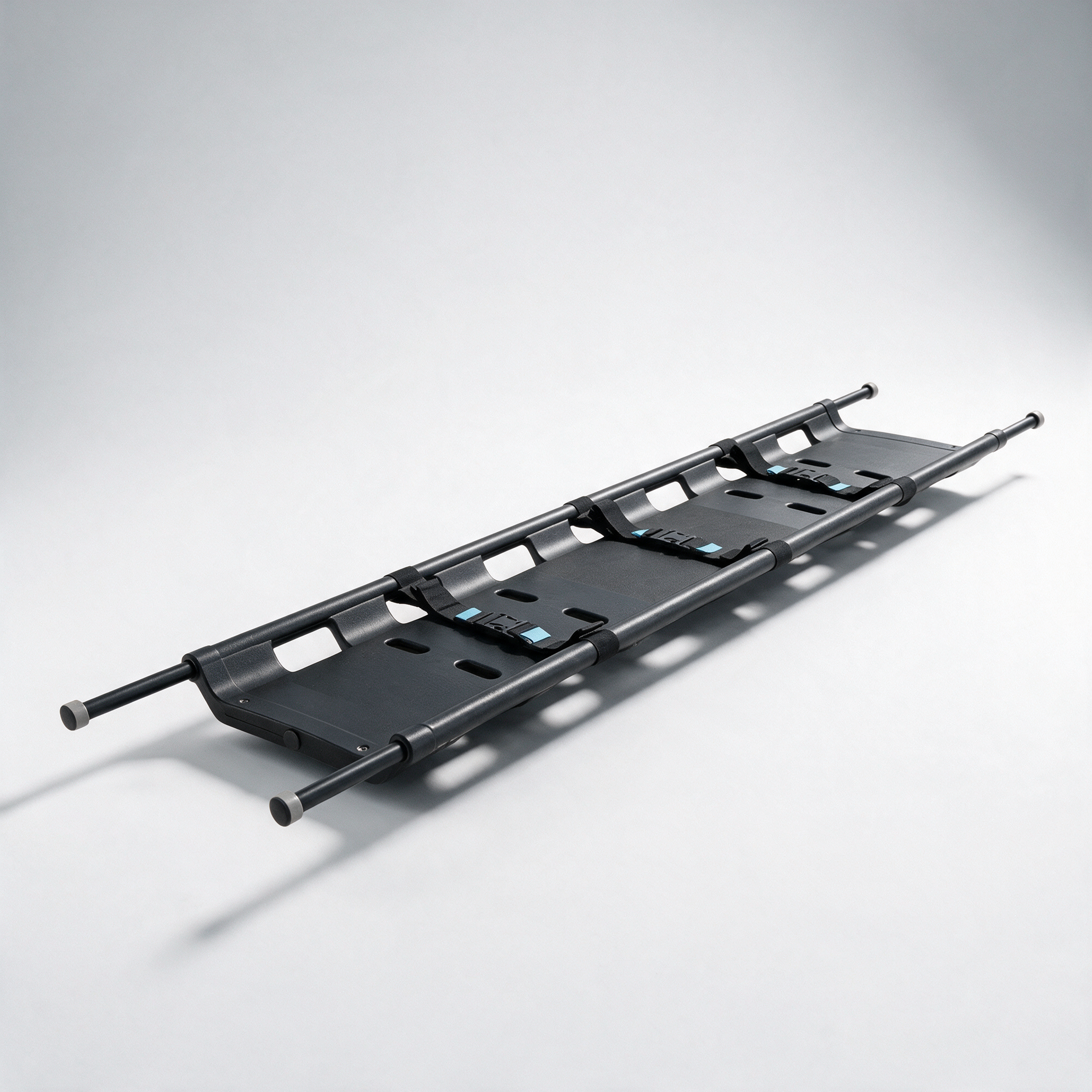
A rigid emergency stretcher, such as the LESS Emergency Stretcher PRO, has a fixed construction. Review its handles, straps, weight and compatibility with stands, bags and other equipment. Check the current datasheet for the exact model.
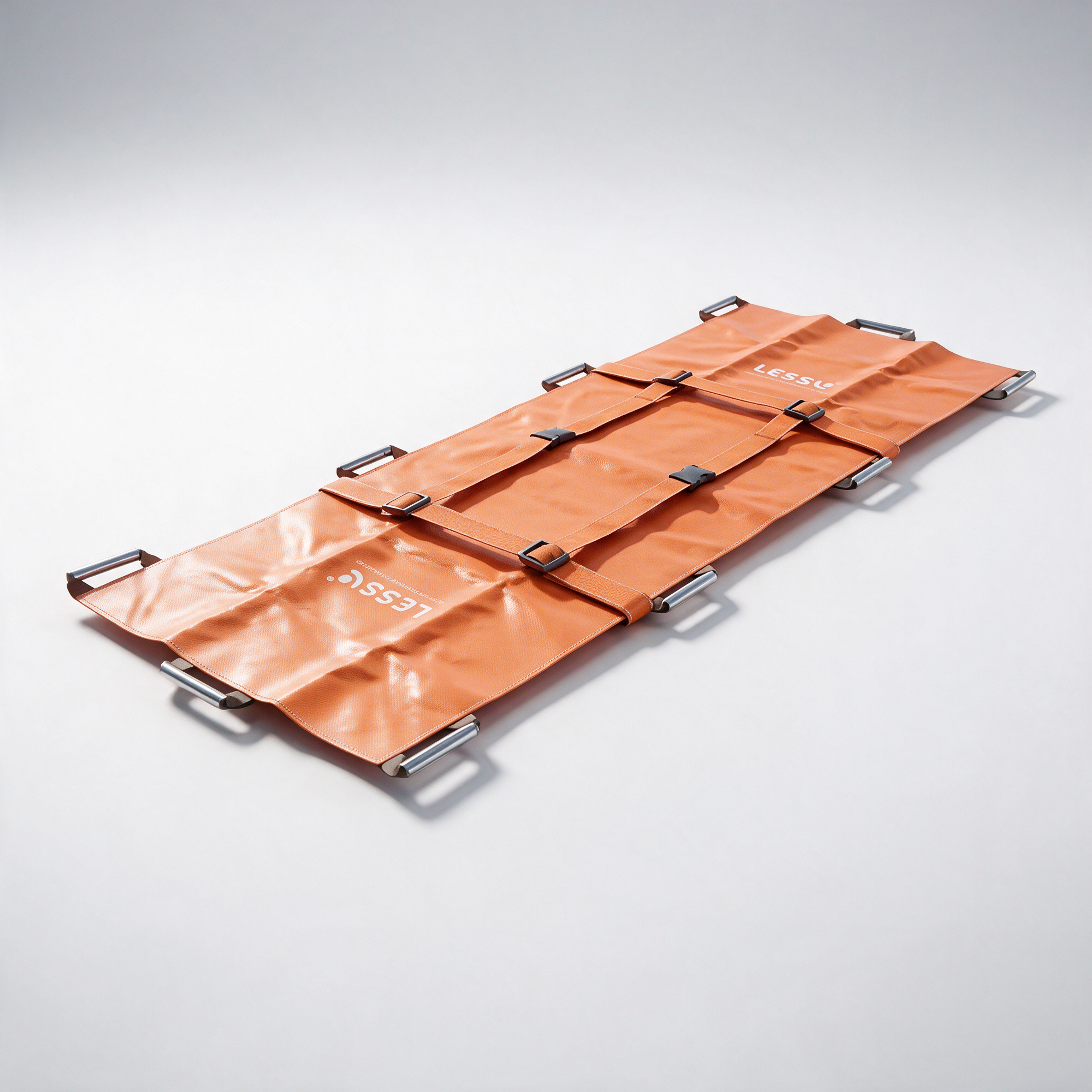
A carry sheet or soft stretcher is flexible and packs compactly. The LESS Soft Stretcher, Heavy Duty and Tactical are different models. Compare dimensions, handle positions and stated load limits individually; the specifications of one version do not apply to every version.
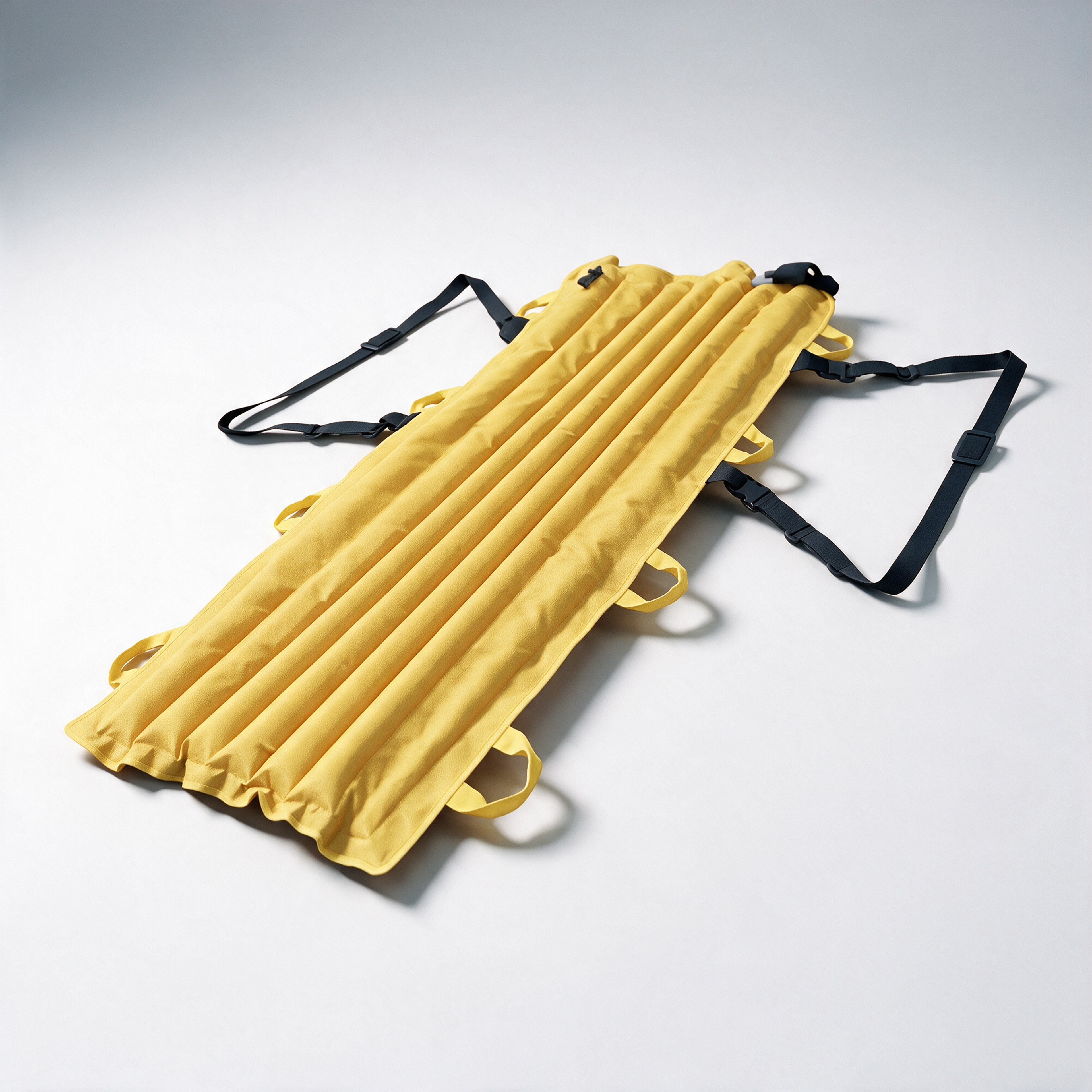
An inflatable stretcher such as the EXtretcher has different preparation and accessory requirements. Include the inflation system, checks before use and component storage in your assessment. Compare the complete package, not just the packed stretcher.
Part / 03
Consider the complete equipment system
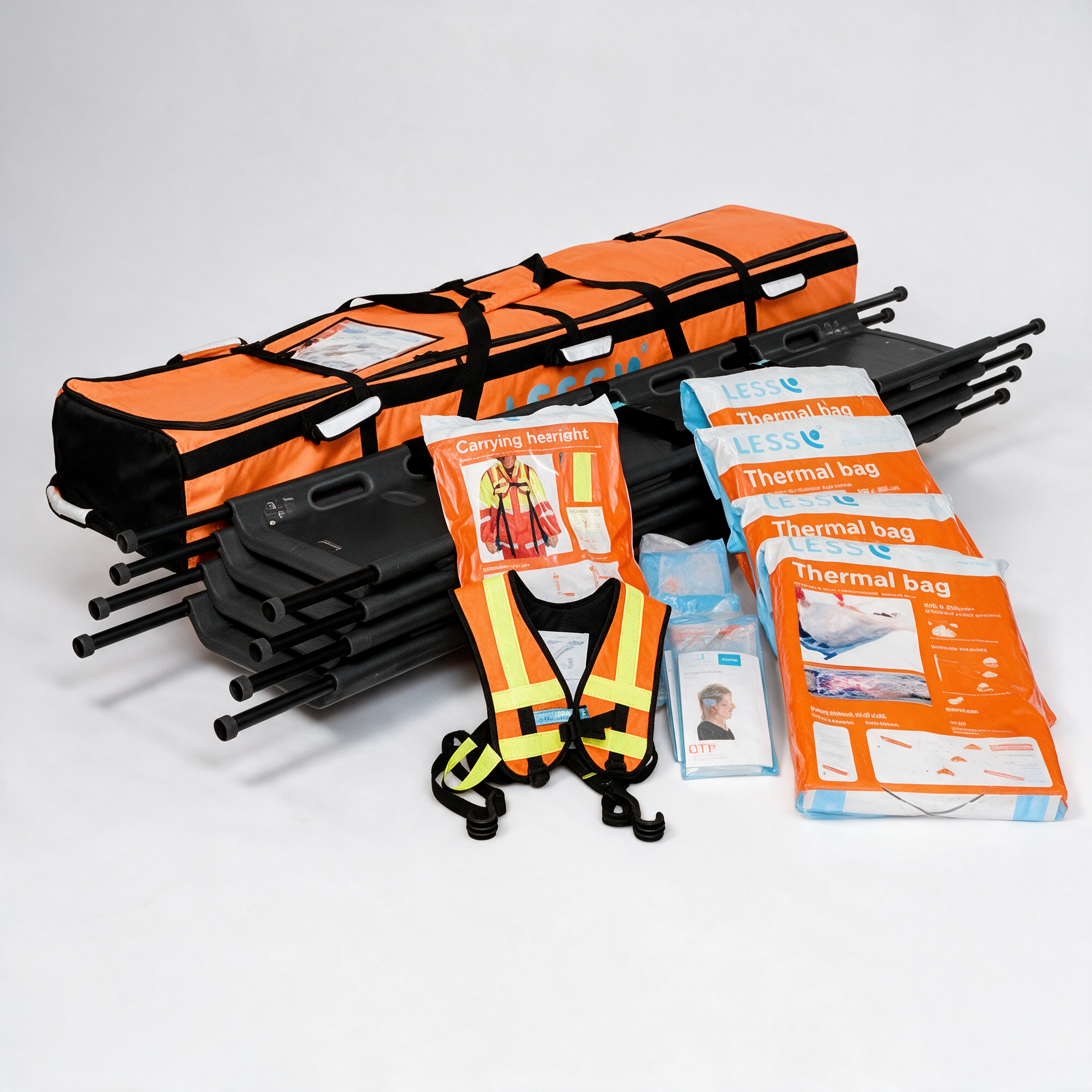
List everything to be used with the stretcher: patient straps, thermal bags, carrying aids, stands and transport bags. Ask for confirmation where components must fit together. A product name or photograph does not establish compatibility.
If several stretchers are needed at one location, a stretcher kit may be relevant. Consider how the kit moves from storage to a vehicle and onwards to the incident site. Request a demonstration of the configuration you are considering.
Part / 04
Include these points in your request for a quote
A clear specification makes quotations easier to compare and helps identify the documentation for the correct variant. Separate mandatory requirements from preferred features.
- Intended use, quantity and delivery location.
- Load limits and dimensions from the current product documentation.
- Weight and packed dimensions including the accessories you will carry.
- Cleaning, inspection, spare parts and storage according to the instructions.
- Training and the opportunity to test compatibility with your existing equipment.
Common questions
Is a carry sheet the same as a stretcher?
A carry sheet is flexible, while a rigid stretcher has a fixed construction. Their properties and limitations differ. Choose according to the task and the specific instructions for use, and ask for advice if suitability is unclear.
What load can an emergency stretcher carry?
This depends on the model. Refer to the documentation for the exact article number and configuration rather than assuming one capacity applies to all stretchers or carry sheets.
Can LESS help configure a stretcher kit?
Yes. LESS can assist with equipment selection and review how components should work together. Include the quantity, intended use, storage space and existing equipment when contacting us.
Product information and further reading
This guide draws on the product information below. Refer to product pages for current specifications, datasheets and instructions, and confirm your requirements with LESS before ordering.